The honest answer
In Southern California, a quality inground pool is far more likely to add value and desirability to your home than in almost any other market in the country. Cold-climate studies that show pools as a liability don't apply here. When a buyer tours a home in Orange County or the Inland Empire without a pool, they're already mentally calculating what it would cost to add one.
That said, a pool is not a guaranteed dollar-for-dollar return. It's better understood as a combination investment: part resale asset, part years of lifestyle you'd have paid for anyway — vacations, resort stays, entertainment. Most owners who try to calculate ROI forget to count the decade of summers the pool bought them.
What buyers expect in SoCal
In much of Southern California, a pool isn't a luxury feature — it's a baseline expectation at a certain price point. Neighborhoods in South Orange County, the San Fernando Valley, and the Coachella Valley routinely see buyers screen out homes without pools entirely.
This shifts the math: in a pool-saturated market, not having a pool can hurt your listing more than having one helps it. A home without a pool may sit longer or require a deeper price concession than one with a clean, modern build. That's a different framing than "the pool adds X percent" — it's closer to "the pool keeps you in the running."
What raises value
Not all pools are equal in the eyes of a buyer or an appraiser. The details that move the needle:
Quality finish. A genuine Pebble Tec or exposed aggregate surface reads as premium. It holds up, looks rich, and buyers recognize it.
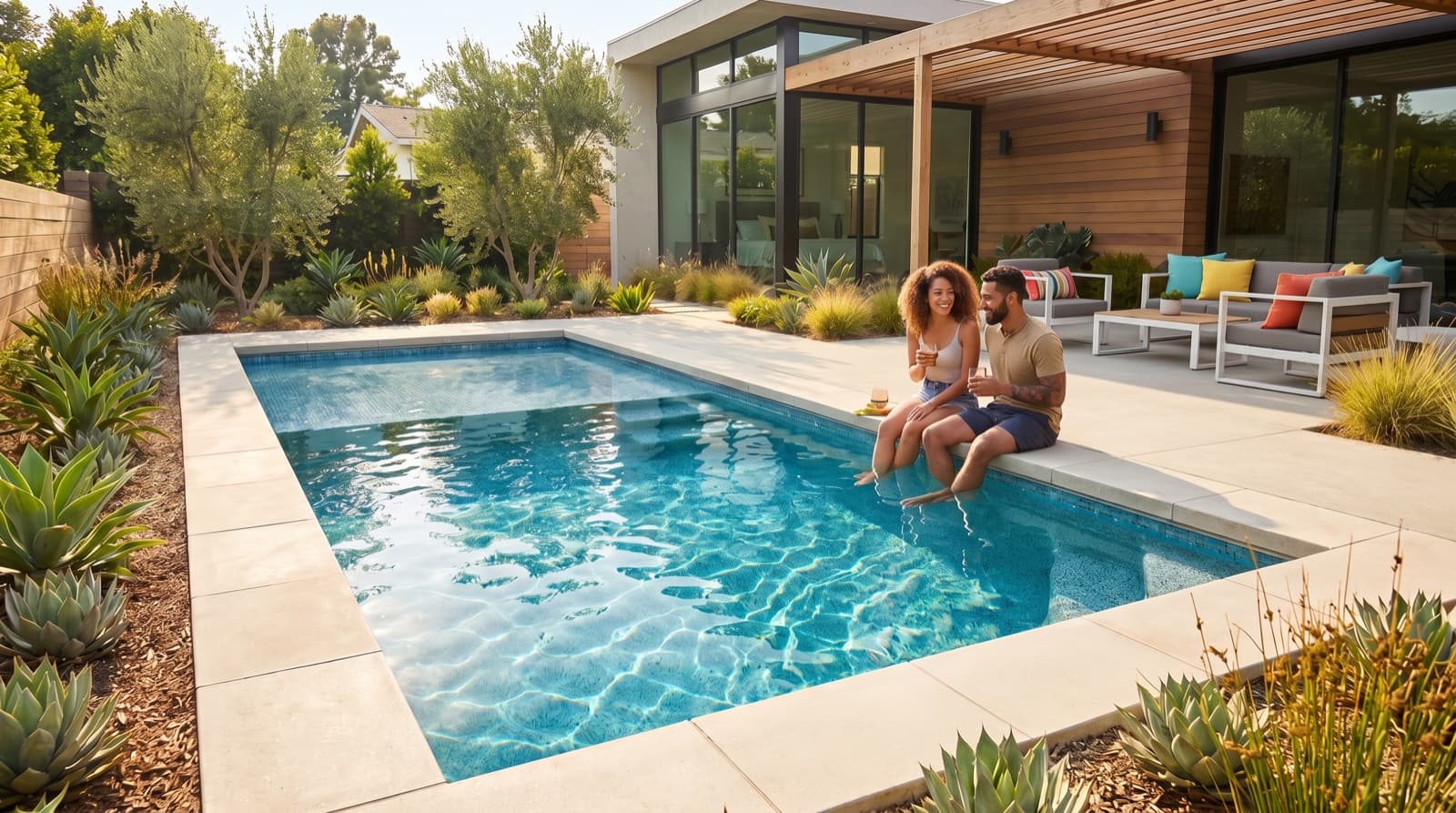
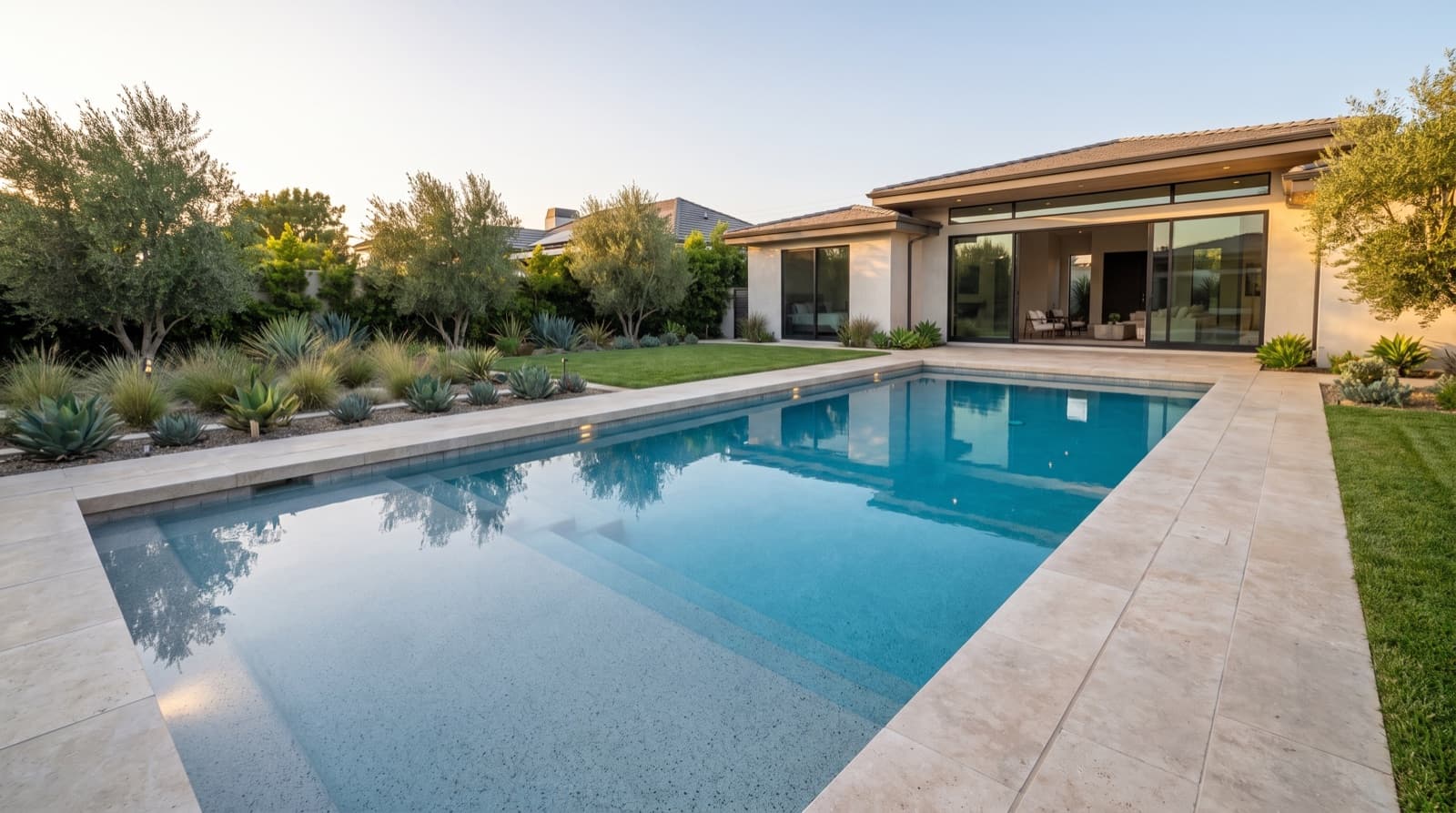
Good design. A pool that flows with the yard, connects to outdoor living space, and feels intentional adds perceived value well beyond its cost. A slab of water dropped in a corner does not.
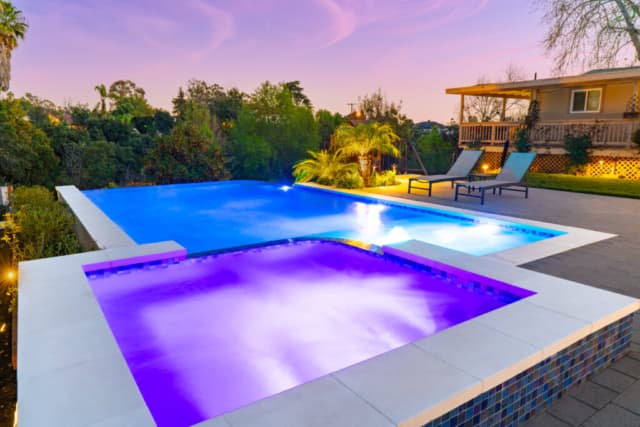
Modern automation. Variable-speed pumps, app-controlled heaters, and LED lighting are now expected. A pool that requires manual valves and a maintenance visit to adjust anything will land lower.
Safety. A compliant fence, self-closing gate, and proper setbacks are legally required and signal responsible ownership. Missing any of them becomes a negotiation point — or a deal-breaker.
Low-maintenance surface and equipment. Buyers price in the cost of upkeep. A pool with a reputation for easy, low-cost maintenance is simply worth more.
What hurts value
A pool can actually drag on your sale price if the buyer sees it as a project rather than a perk:
A dated or failing finish — plaster that's stained, rough, or checked — signals an expensive replaster before the buyer can enjoy it. Some buyers just walk.
Poor layout that dominates the yard and leaves no room for grass, shade, or a dining area creates a zero-sum yard. The pool ate the lot.
Aging or mismatched equipment — undersized pumps, leaking fittings, non-code wiring — becomes a negotiated credit or a reason to pass.
No shade or integration. A pool surrounded by nothing but concrete, with no pergola, landscaping, or outdoor kitchen, misses the lifestyle sell entirely.
The bottom line: a pool built cheap and left alone can become a liability. A pool maintained well and integrated into a real outdoor living space is an asset.
The package-pool math
Cost-to-value math changes significantly depending on what you paid to build. A fully custom pool at $120,000–$150,000 and a package pool starting from $54,900 are both swimming pools — but they have very different breakeven timelines.
A package pool that delivers the same quality finish and design integration as a custom build (just in a pre-engineered shape and size) lets you enter the market at a price point where the resale lift and the lifestyle value are far easier to justify.
The final cost of any pool is confirmed at the free in-home design review — your lot, setbacks, soil, and access all factor in. But starting from a published base means there's no mystery about where the number begins.
Enjoyment value: the return nobody counts
Every conversation about pool ROI focuses on resale and skips the decade of summers in between. Think about what a pool replaces: weekend resort stays, vacation rentals with pool access, neighborhood pool memberships, day trips to water parks.
A family that uses their pool regularly from May through October in Southern California is getting real utility out of that investment every single year — not just when they sell. Kids who grow up with a pool, guests who come over because you have a pool, Friday nights that don't require a hotel booking: that's the return most appraisals can't capture.
A pool built well, maintained easily, and used consistently is one of the highest-ROI outdoor investments a SoCal homeowner can make — even if the appraiser can't put it all on paper.
How to make the right call
A few questions worth answering before you decide:
How long do you plan to stay? If you're building and selling in two years, the resale math is tighter. If you're staying ten, the lifestyle return dominates the calculation.
What does your neighborhood already have? A pool in a pool-dense neighborhood is table stakes. A pool in a neighborhood where most yards are bare is a bigger differentiator.
What's your vision for the yard? The pool needs to work with — not fight — your outdoor space. A free design review is the fastest way to see what's possible on your specific lot.