The honest upfront cost comparison
Above-ground pools are genuinely cheap to start. A decent steel-frame or resin model runs $3,000–$15,000 installed. You can have water in your backyard this weekend for what a kitchen renovation costs.
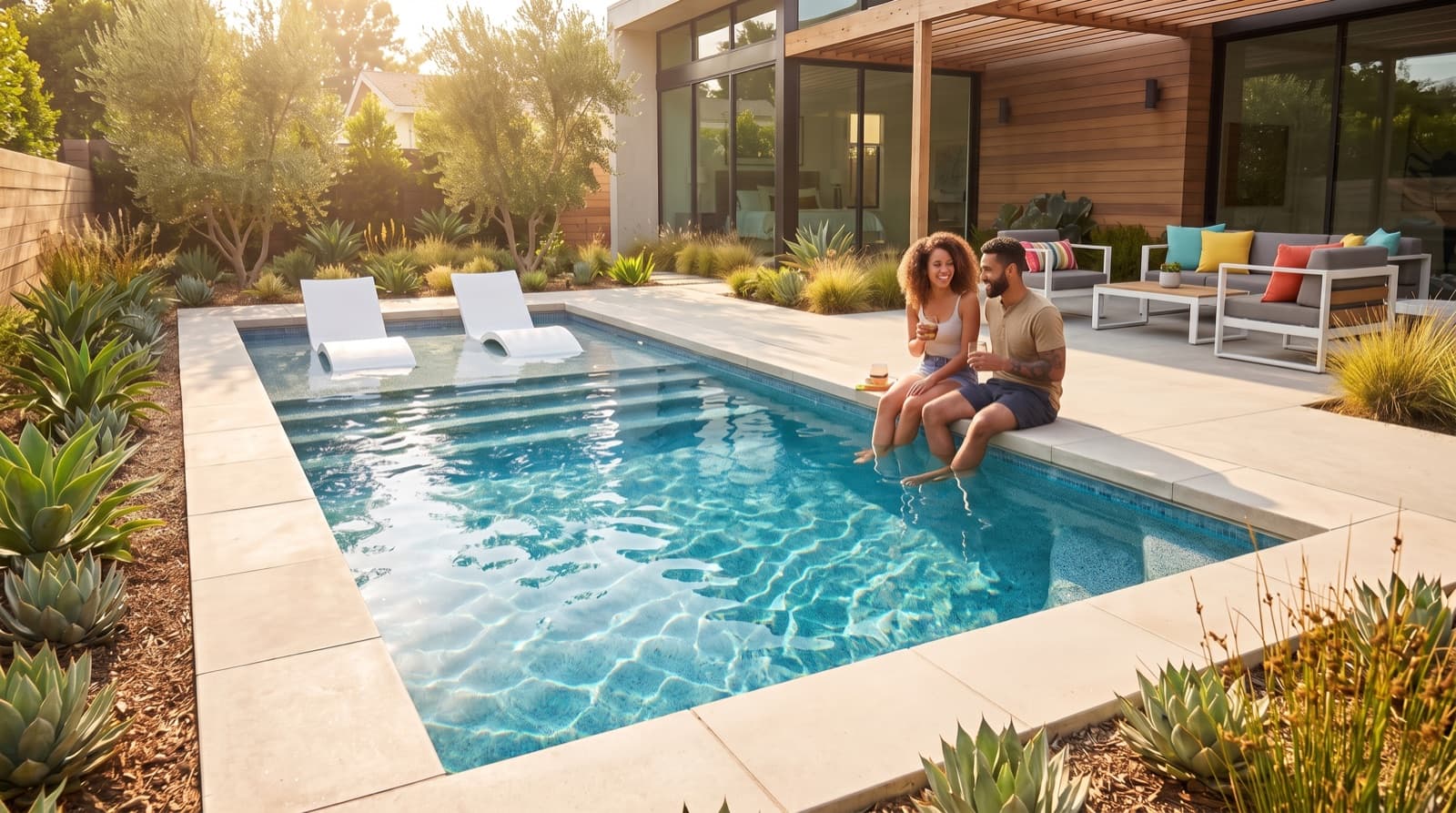
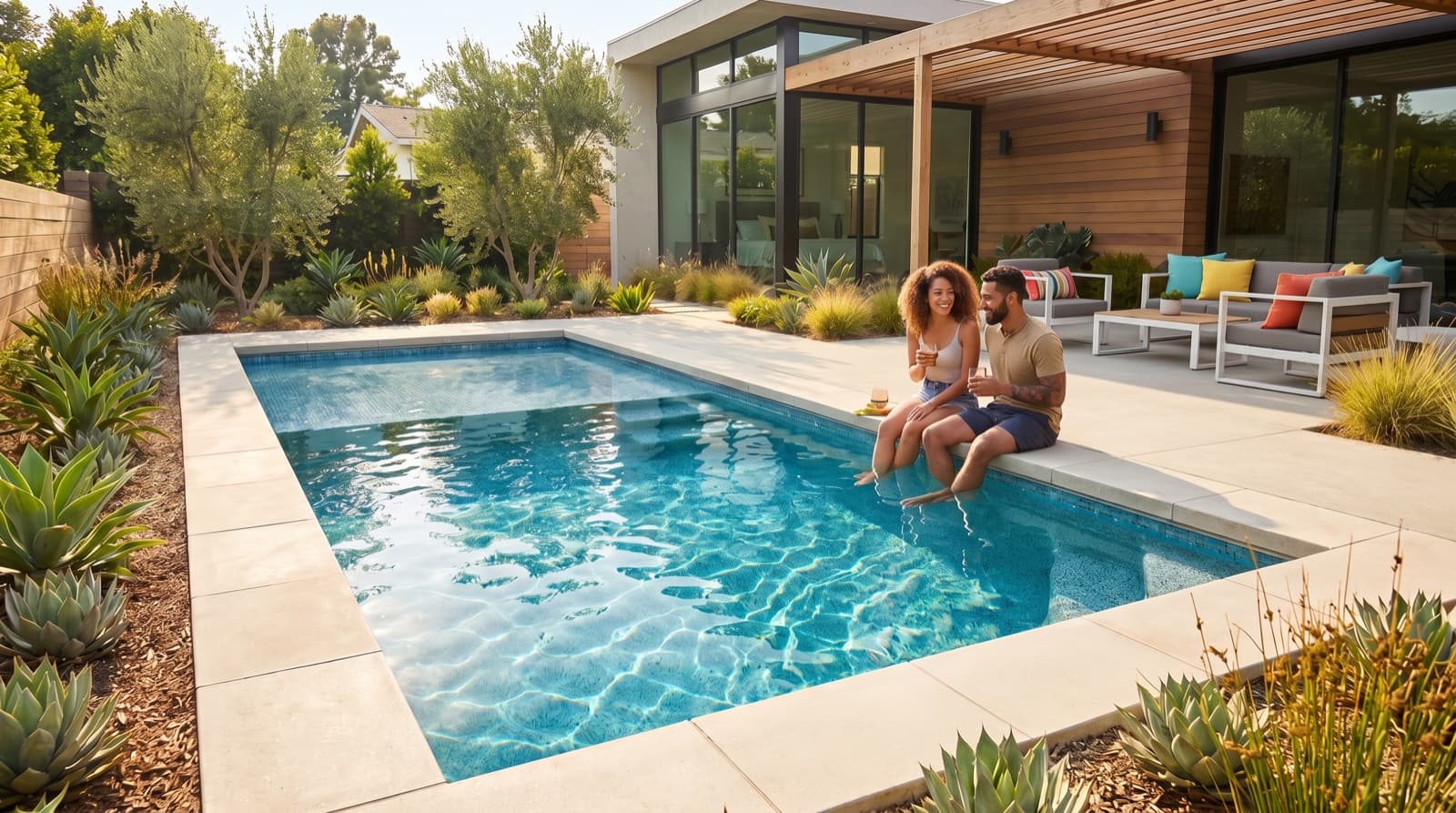
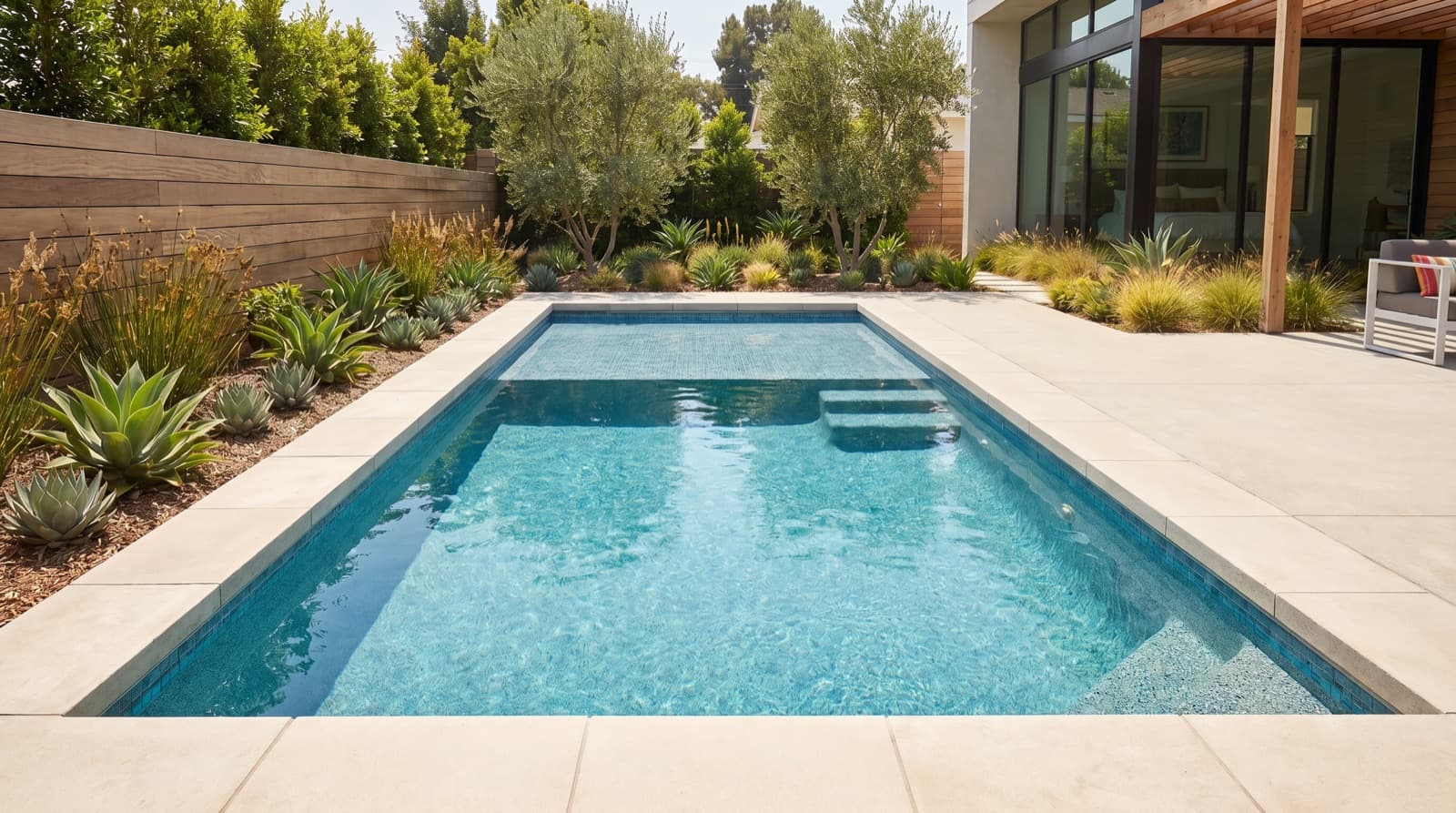
Inground pools are a bigger investment. A fully custom inground build in Southern California typically runs $85,000–$150,000+. Pre-engineered package pools — like the NEXA Series — start from $54,900 and deliver the same Pebble Tec finish, LED lighting, and Pentair automation as a six-figure custom build, because the design overhead is amortized, not charged to every homeowner individually.
The upfront gap is real. What changes the math is what happens over the next 10, 20, and 30 years.
Lifespan and durability
A well-maintained above-ground pool lasts 7–15 years. The liner degrades, the frame corrodes, and eventually the structure fails. Replacement is not a repair — it is a full new purchase.
A Gunite inground pool with a quality plaster finish lasts 30–50 years or more. The shell is essentially permanent. Replastering every 15–20 years and occasional equipment replacement are the recurring costs — not rebuilding the pool. In Southern California's climate, with year-round sun and no freeze-thaw stress, inground pools age exceptionally well.
Over a 30-year horizon the "cheaper" above-ground option may cost more in cumulative replacements than the inground pool you installed once.
What happens to your home's value
This is where the two options diverge sharply.
An inground pool in Southern California adds resale value. Most appraisers and real estate agents in Orange County, the Inland Empire, and San Diego market areas agree: a well-finished inground pool is a genuine asset, not just an amenity. Buyers in this climate actively seek it. The return varies by neighborhood and property, but it is real.
An above-ground pool generally does not add resale value — and can subtract it. Buyers see a temporary structure they may not want, a liner they may need to replace, and a project to remove if they change their mind. Many real estate agents recommend removing above-ground pools before listing.
If you own your home and plan to stay or sell, the inground vs. above-ground decision is partly a question of whether you want your investment in the ground or gone when you list.
Aesthetics, customization, and the SoCal lifestyle
An above-ground pool is a container for water. That is not a criticism — it does the job. But the options stop there. Shape is fixed, depth is shallow, and integration with your yard, patio, or home is limited.
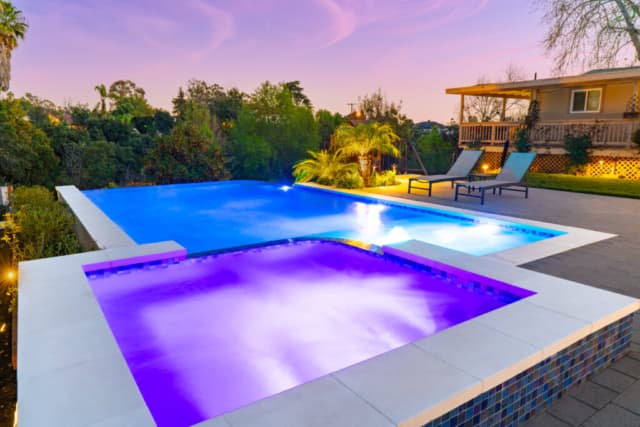
An inground pool can be designed around your space. A Baja shelf for lounging in shallow water, a tanning ledge, color-changing LED lighting, an attached spa, and custom tile work are all realistic additions. Every NEXA model includes a Baja shelf standard — the feature families use most on warm California afternoons.
For a Southern California backyard, where the pool is visible from the living room and used eight or nine months of the year, aesthetics matter. A pool that looks like furniture matters. Above-ground pools rarely reach that bar.
Permitting, installation, and yard integration
Above-ground pools typically do not require a permit in most California jurisdictions — which is partly why they can be installed in a weekend. The tradeoff is they also cannot be integrated: no attached decking, no flush-grade surround, no landscape design that flows into the pool edge.
Inground pools require permits, engineering drawings, and inspections. A NEXA Series build takes 5–7 weeks from permit approval to water. The permit process is handled for you, and the fixed package price includes standard residential permits. The result is a permanent structure that belongs to your property and your neighborhood — not something you set up and take down.
Permitting timelines vary by city and backlog, but a NEXA designer can give you a realistic picture for your specific jurisdiction at the free design review.
Maintenance: the real difference
Both pool types require regular chemistry management, cleaning, and equipment upkeep. The differences are in what fails and how often.
Above-ground pools are more susceptible to liner punctures, algae behind the liner, and structural corrosion at the seams. Liner replacement — typically every 5–10 years — runs $1,000–$3,500 and is not optional.
Inground pools require replastering roughly every 15–20 years, and filter/pump maintenance on a standard schedule. Pentair automation — standard on every NEXA pool — handles most scheduling automatically, including variable-speed pump cycles that cut energy costs.
Neither pool type is maintenance-free. Inground maintenance is more predictable and less frequent in terms of major interventions.
Who each option actually suits
Above-ground is a good choice if: you are renting and cannot install permanent structures, you need something for young children right now and will reassess in a few years, your budget is genuinely constrained to under $15,000, or you expect to move within two or three years.
Inground is the right choice if: you own your home, plan to stay or sell it at some point, use your backyard regularly, and want a pool that becomes part of the property rather than a piece of equipment in the yard.
For most Southern California homeowners asking this question — families in Orange County, San Bernardino, Riverside, or San Diego — the answer is inground. The price gap that used to make it a difficult decision has narrowed. NEXA packages start from $54,900, and the final number for your specific lot is confirmed at a free in-person design review, not quoted blindly.
Timeless Pools holds CSLB #1019202 and has been recognized in the Pebble Tec World's Greatest Pools program. The NEXA Series is designed and installed by Genesis-certified professionals.