What a pool finish actually is
The interior finish is the layer you see when you look into the water and the surface you feel underfoot when you wade in. It coats the structural shell — gunite or shotcrete — and does three jobs at once: it seals the shell from water intrusion, it determines the color and visual depth of the water, and it's the primary surface in contact with swimmers every day.
Most people shopping for pools focus on size, shape, and equipment. Finish is an afterthought — until they're living with it. A rough, discolored, or pitted surface becomes the one thing you notice every time you swim. A quality finish disappears into the experience; a poor one defines it.
The finish spectrum: plaster, aggregate, and genuine Pebble Tec
Pool interiors typically fall into three categories.
White marcite / plaster is the entry-level option. It's smooth, inexpensive, and turns a hazy turquoise in most water conditions. It's also the least durable — prone to etching, staining, and roughness within five to ten years, especially in Southern California's hard water.
Generic "pebble-style" finishes sit in the middle. Contractors mix pebble aggregate into plaster to improve durability and texture. The result can be better than plain plaster, but quality varies widely with the supplier and the applicator. There's no consistent product standard, no performance guarantee, and no independent certification.
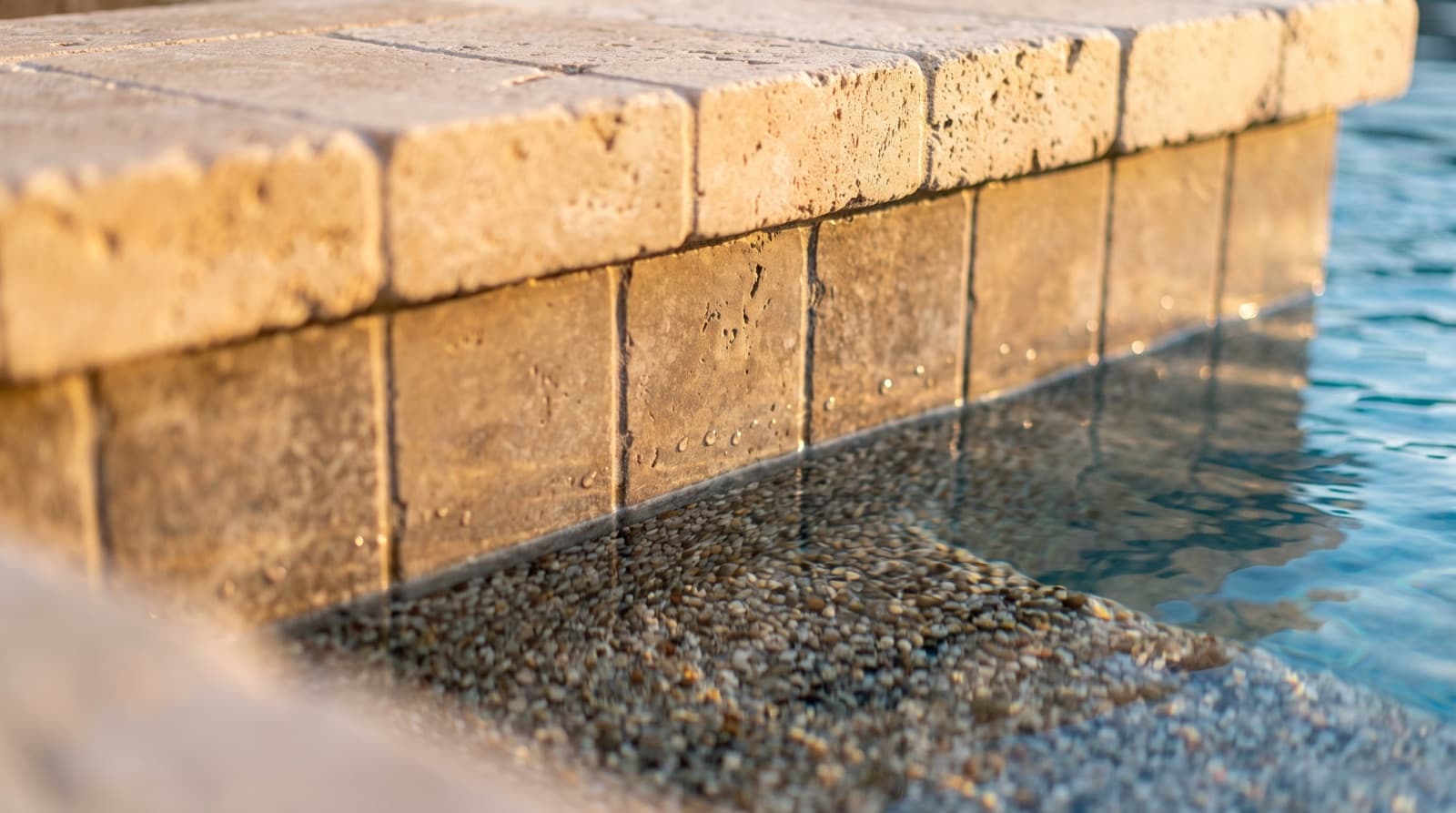
Genuine Pebble Tec is a proprietary product from Pebble Technology International — the company that invented the category. It uses natural river pebbles, quartz, and other certified aggregates mixed to a precise formula. Application requires trained, certified crews. The result is a finish that's been tested, refined, and supported by decades of real-world installations.
Durability: the 20-year math
A white plaster finish typically needs resurfacing every eight to twelve years. In the Inland Empire and greater LA basin — where summer heat and mineral-heavy fill water are facts of life — that window often closes faster.
Genuine Pebble Tec is designed to last twenty years or more under normal conditions. That's not a marketing claim; it's the track record that has made it the preferred finish for high-end residential and commercial pools since the early 1990s.
When you factor in the cost of draining, resurfacing, and refilling a pool — plus the weeks out of service — the long-run math strongly favors a durable finish up front.
Water color and the look of the pool
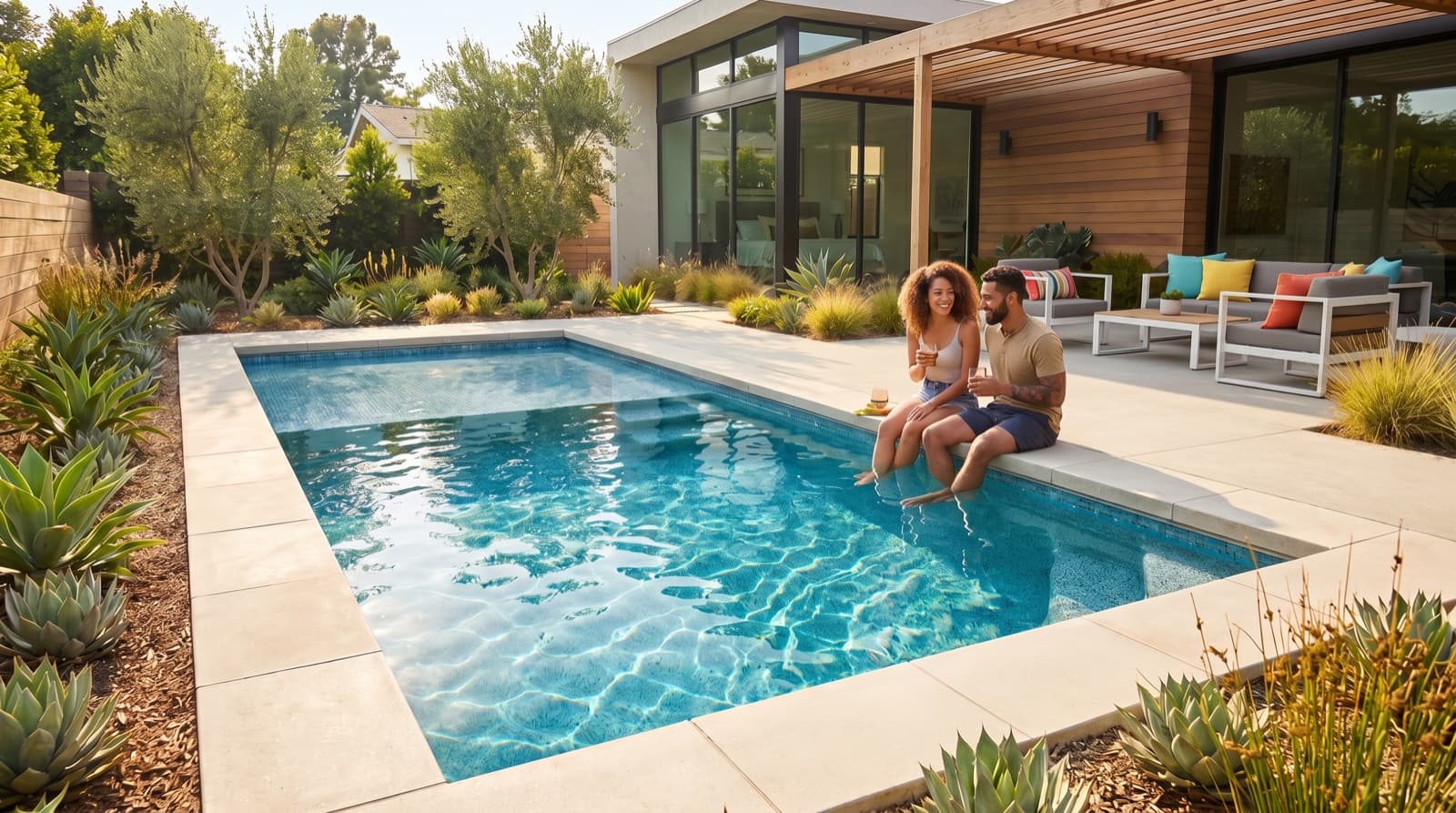
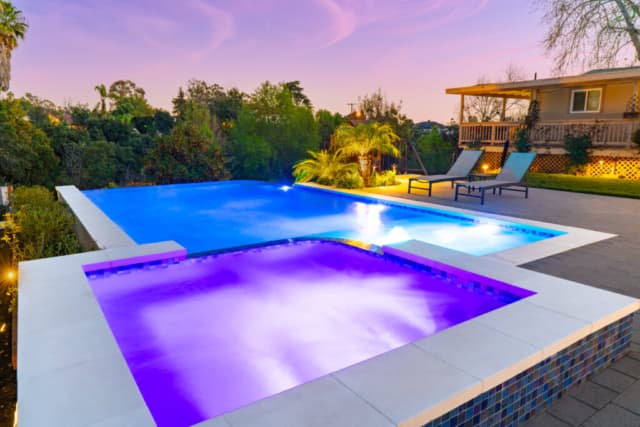
The finish color interacts with refracted light to produce the water color you see. White plaster reads as light blue-green — fine, but predictable and flat. Pebble Tec's aggregates scatter light differently depending on depth, angle, and the color selected, producing richer, more layered water tones that shift from aquamarine in the shallows to deep sapphire at the bottom of an eight-foot end.
This is a big part of why high-end resort pools and award-winning residential builds almost universally use pebble aggregate finishes. The visual depth is simply not achievable with a flat plaster surface.
Feel underfoot and swimmer comfort
Genuine Pebble Tec is slightly textured — the exposed aggregate surface gives traction without being abrasive. Swimmers describe it as similar to walking on a smooth river bottom.
Improperly mixed or applied pebble finishes can run rough, leaving a surface that scrapes knees on the pool wall or tears up the bottoms of feet. The Pebble Technology International certification process — covering both the product and the applicator — exists specifically to prevent this. Consistent aggregate size, proper matrix ratios, and trained application crews produce a predictable, comfortable result.
Stain and etch resistance
Hard water leaves calcium deposits. Pool chemicals, if unbalanced, etch soft plaster and leave permanent scarring. Organic matter — leaves, sunscreen, metals in fill water — stains light surfaces visibly.
The dense, low-porosity surface of genuine Pebble Tec resists all three. Calcium scale still needs to be managed, but it's less likely to bond permanently. Minor chemical imbalances that would scar a plaster surface typically have no lasting effect on a properly applied pebble finish. And the richer base colors hide organic staining far better than white plaster does.
Why "genuine" matters — and what NEXA includes
The phrase "pebble finish" has no legal or industry definition. Any contractor can apply a pebble-and-plaster mix and call it by any name they choose. What you can verify is whether the product is certified Pebble Technology International material and whether the application crew is PTI-trained.
NEXA Series pools include genuine Pebble Tec as standard on every model — not an upcharge, not an optional upgrade. It's part of what makes a fixed package price meaningful: you know exactly what finish you're getting.
Timeless Pools, the builder behind NEXA, is a Pebble Tec World's Greatest Pools award winner. That credential reflects both product choice and application quality — the two things that determine what your pool actually looks and feels like ten years from now.
Every NEXA model starts from $54,900. Your final confirmed price is set at the free in-home design review, where we walk through your site conditions, any customizations, and exactly what's included.