The counterintuitive answer: fall and winter
The most common question we hear is some version of "when should we start?" The instinct is spring — the days are warming up, summer feels close, motivation is high. It makes sense emotionally. It also puts you at the back of a long line.
In Southern California, the smart move is to start your build in fall or early winter. That sounds odd until you do the math: a NEXA pool typically takes around 5–7 weeks to complete from permit-to-water. Start in November, and you're swimming in January. Start in October, and the pool is ready well before the Memorial Day rush. Wait until April, and you might be staring at a construction site while your neighbors are already in the water.
SoCal builds year-round — that's the whole advantage
In Chicago or Denver, a "winter build" is genuinely impractical. Frozen ground, heavy rain, and subzero temps shut sites down for months. Southern California simply doesn't have that problem.
Our crews work through the winter. Mild temperatures keep concrete curing on schedule, and rain days in SoCal are few enough that they rarely move the timeline meaningfully. What you lose in "summer energy," you more than make up for in speed and availability.
Permits move faster off-peak
Permitting is one of the biggest wild cards in any pool build. Municipalities process permits in the order they receive them, and most homeowners submit in spring.
Submit in October or November, and you're ahead of that wave. City review queues are shorter. Inspectors are more available. That compresses your timeline on the front end — before a single shovel hits the dirt.
A NEXA build already runs lean by design — five pre-engineered models means engineers aren't starting from scratch on your drawings. But shorter permit queues make a good process even faster.
Scheduling: crews, equipment, and subs
Pool construction involves a chain of subcontractors: excavation, steel, plumbing, electrical, plaster, coping. In peak season (April through August), every one of those crews is stretched thin. Lead times for equipment deliveries stretch out. Inspections get stacked.
Off-peak, the same crews have more flexibility. That flexibility shows up as faster scheduling at each phase — which tightens the overall timeline and reduces the risk of a multi-week gap between steps.
Timing backward from when you want to swim
Here's the simplest way to think about it: decide when you want to be in the water, then count back 5–7 weeks for the build itself, plus 2–4 weeks for permitting, plus a week or two for the design review and finalization.
Want to swim on Memorial Day weekend? You should be finalizing your design by late February at the latest — ideally earlier.
Want to swim before July 4th? Same logic. Starting the conversation in April is cutting it very close.
The math doesn't care about your excitement level in March. It only cares about when you started the clock.
Booking early beats the summer rush — every time
There's a version of this that costs nothing in timeline and everything in regret: the buyer who calls in June, hears the next available design review is six weeks out, and realizes their summer is already gone.
Demand for pool installations in SoCal is not going to get quieter. More buyers discover NEXA every month. Build slots in spring and early summer fill months in advance.
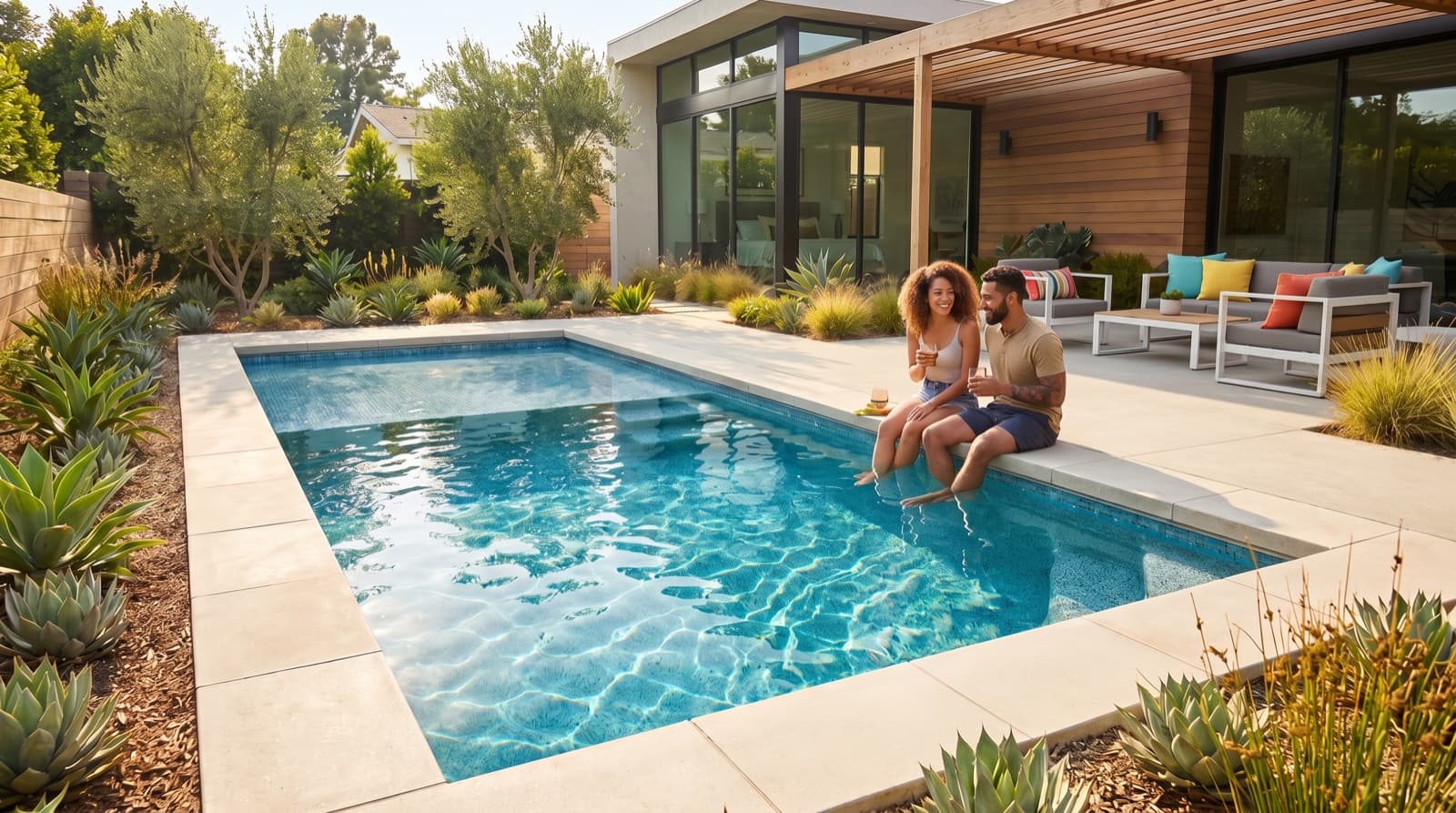
The buyers who get the summer they envisioned are the ones who booked their free design review in October or November, locked their build slot, and watched the project complete before the heat arrived.
The free design review is the only thing standing between "thinking about a pool" and a confirmed build slot. It takes an hour and locks in your package price, timeline, and site assessment — everything you need to know before you commit.
What a NEXA build actually looks like on a calendar
A NEXA Series pool starts from one of five pre-engineered models — ranging from $54,900 — which means design is already done and engineering is mostly done before your name is ever on a permit application. That's a real head start compared to a fully custom build.
Once permits are in hand, a typical build sequence runs:
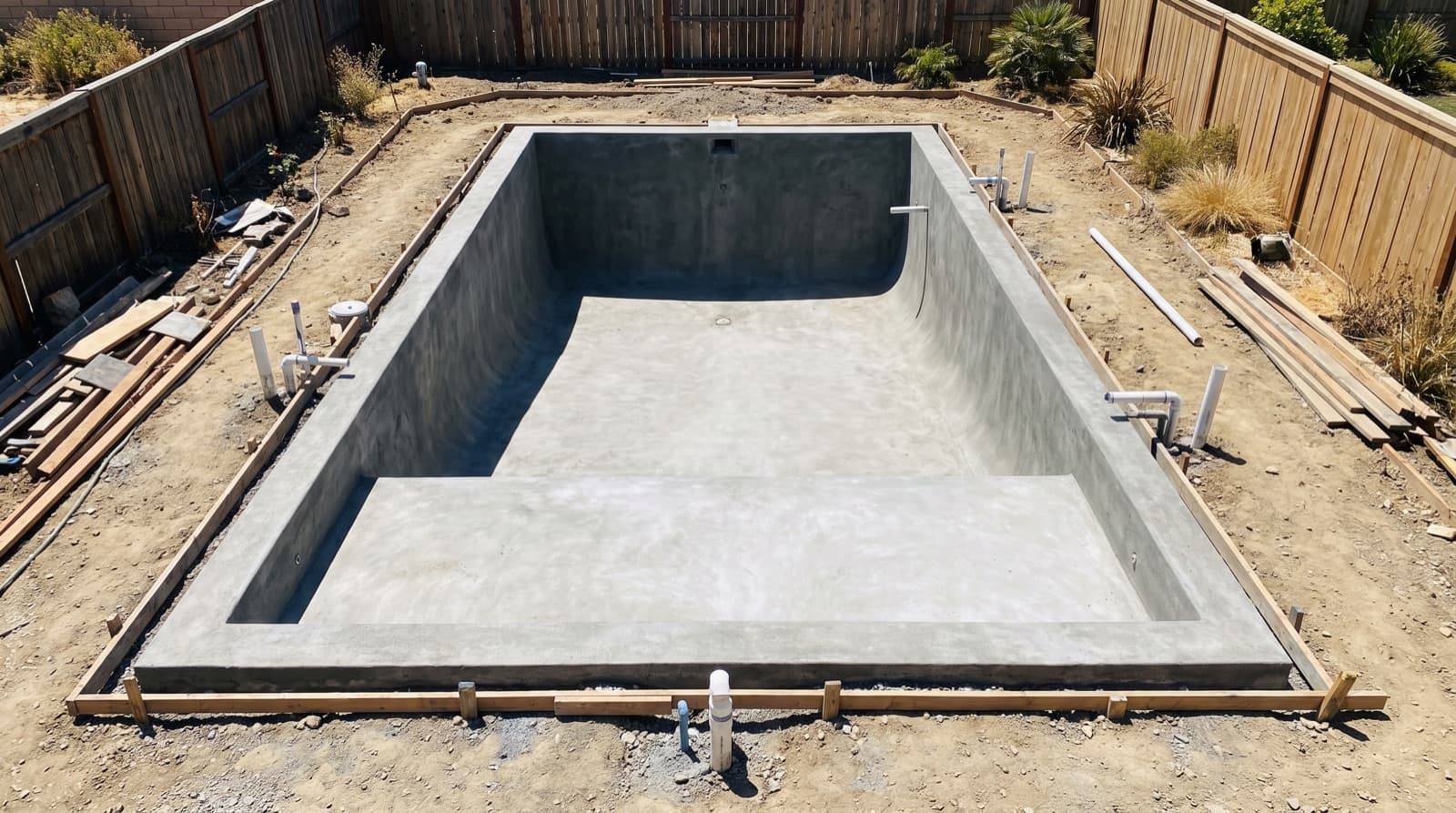
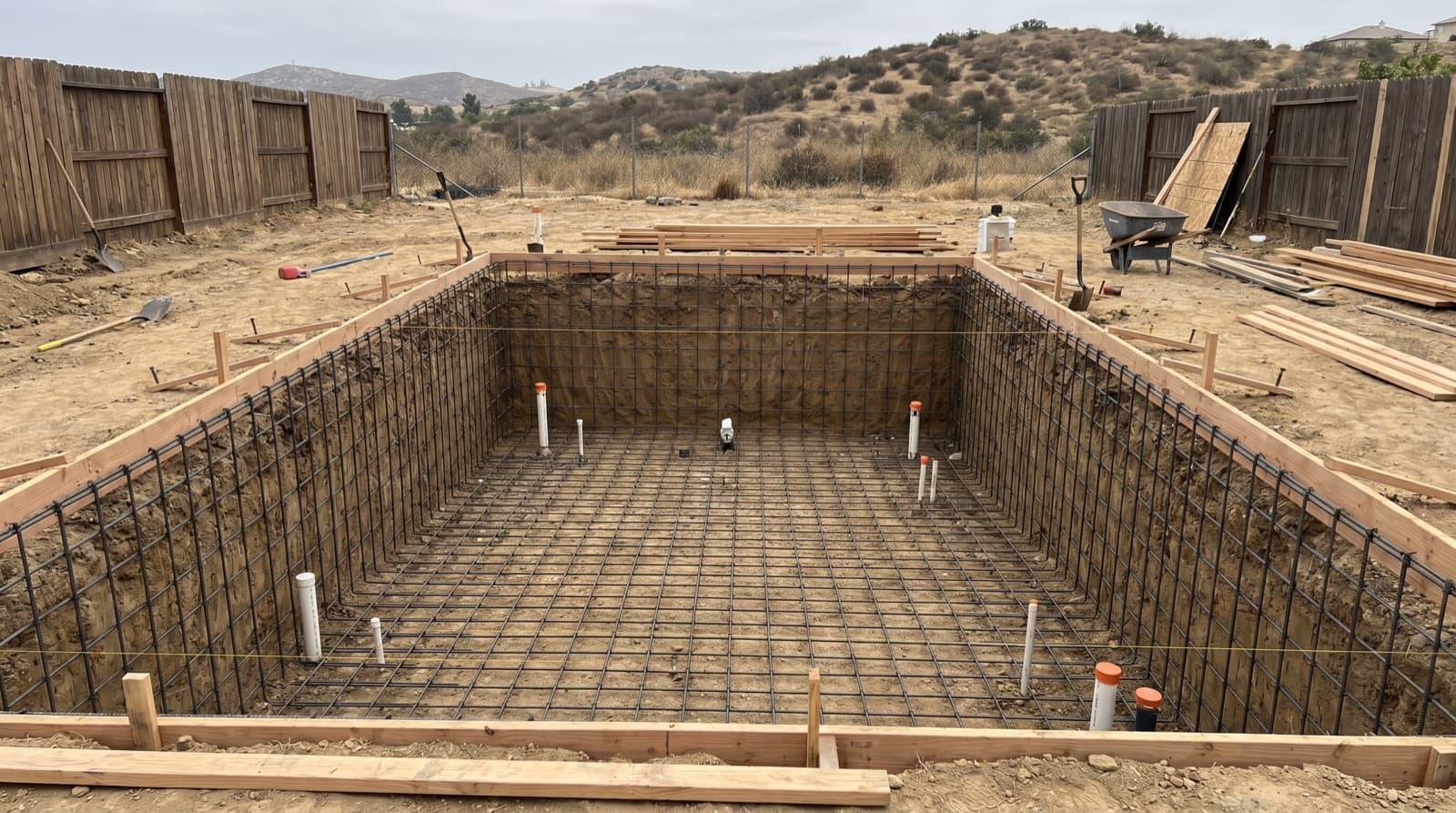
Week 1–2: Excavation and steel.
Week 2–3: Plumbing, electrical, and inspections.
Week 3–5: Gunite or shotcrete shell.
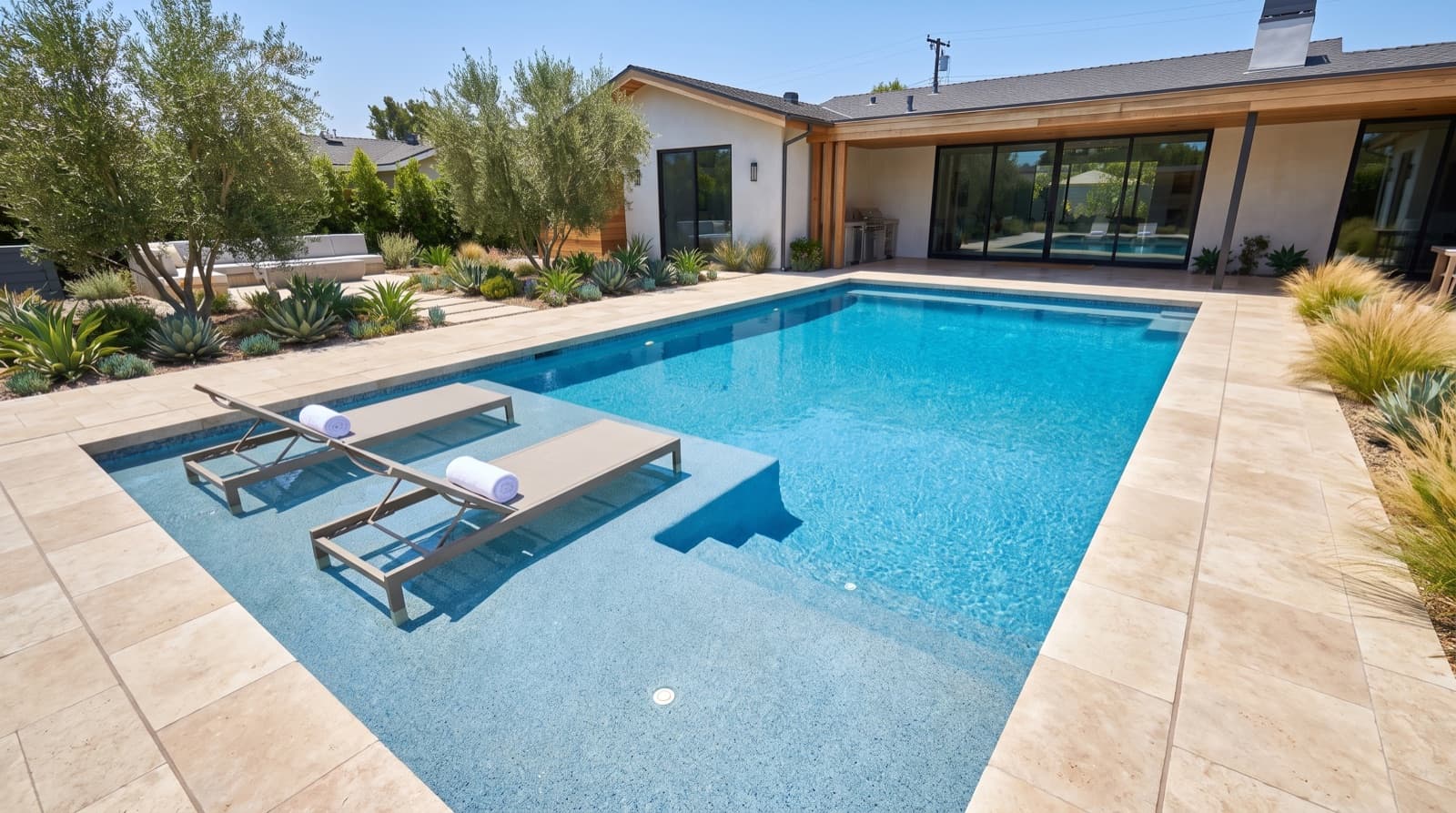
Week 5–7: Coping, tile, equipment set, plaster.
Total: approximately 5–7 weeks from permit issuance to water-in-pool, depending on site conditions and inspection scheduling. That's a typical window — not a guarantee, since every site is different — but it's a reliable planning benchmark.
The point is: this is a fast build if you're not fighting a backlog. Fall and winter give you that.