Why a permit is required
An inground pool is a permanent structure. In California, that means a building permit is required — no exceptions. The permit process is how the local jurisdiction confirms your pool is engineered correctly, located properly on the lot, and safe for the people who will use it.
Skipping the permit is not a shortcut — it is a liability. Unpermitted pools can block a home sale, trigger retroactive fines, and void homeowner's insurance coverage for pool-related incidents. A permitted pool, by contrast, comes with documented inspections that protect you and any future buyer.
The good news: when you work with a licensed builder, permitting is their job, not yours. Timeless Pools manages the permit application, plan submissions, and inspection scheduling for standard residential installations — and required permits are included in every NEXA package.
What the permit process involves
The exact steps vary by jurisdiction — the City of Irvine, the City of Los Angeles, and a city in San Bernardino County each have their own building department and timelines — but the elements of a typical pool permit application are consistent across Southern California.
Plan review. Your builder submits architectural or construction drawings showing the pool shape, dimensions, equipment location, plumbing layout, and the pool's position on the lot. Many jurisdictions now accept digital submissions.
Structural and engineering documentation. An inground pool must be engineered to withstand soil load and, in California, seismic forces. Pre-engineered pools like the NEXA Series have stamped structural drawings already prepared, which can speed this step significantly versus a fully custom design.
Electrical bonding plan. California requires all pools to have a bonding system that equalizes electrical potential around the pool — a critical safety measure. The electrical plan is part of the permit package.
Drainage. The permit application must address how pool water draining or splashing will be handled on-site. Most jurisdictions want to see that pool water will not drain directly into the street or create nuisance runoff.
Pool safety requirements
California's Swimming Pool Safety Act establishes baseline drowning-prevention requirements for all new residential pools. These requirements are enforced at permit issuance and final inspection, not after the fact.
Barrier and fencing. The pool area must be enclosed by a fence or barrier that a young child cannot easily scale. Minimum height and gate specifications are set by the state and may be supplemented by local ordinance.
Self-closing, self-latching gates. Any gate that provides access to the pool enclosure must be self-closing and self-latching, with the latch above a child's reach or on the pool side of the gate.
At least one additional drowning-prevention feature. State law requires at least one approved safety feature beyond the barrier — options include a pool alarm, a surface alarm, a sub-surface alarm, a safety cover meeting specific standards, or a door alarm on any residence with direct access to the pool area. Your builder will advise which option fits your layout.
These are the general state-level requirements. Your local jurisdiction may have stricter standards. Confirm current requirements with your city or county building department — or ask your builder, who works in your jurisdiction regularly.
Setbacks, easements, and HOA
Setbacks. Every jurisdiction has minimum distances a pool must maintain from property lines, the house foundation, and any recorded easements. Typical rear-yard setbacks in Southern California range from five to fifteen feet, but the number varies by city and by zoning district. Easements — utility corridors recorded on your title — are off-limits for pool construction entirely.
Your builder will pull your property's parcel map and confirm setbacks before the permit application goes in. If a proposed pool location conflicts with a setback or easement, the design is adjusted at that stage — not after excavation.
HOA approval. If your home is in a community with a homeowners association, you will likely need HOA architectural approval in addition to the city building permit. HOA review is a separate process with its own timeline — it can run concurrently with the city permit application, or the HOA may require permits first. Check your CC&Rs early. Your builder can advise on typical timelines for your area, but HOA processing is outside their control.
Hillside lots and soil conditions
Southern California's hillside neighborhoods — from the Palos Verdes Peninsula to Yorba Linda to the foothill communities of the Inland Empire — add a layer to the permitting process that flat-lot builds do not face.
Geotechnical report. On sloped lots, or where soil conditions are uncertain, the building department will often require a geotechnical (soils) report before approving the structural design. The report characterizes the soil, identifies any expansive or unstable conditions, and gives the structural engineer the data needed to specify the right shell design.
Grading and drainage. Hillside pools may require a grading permit in addition to the pool building permit. Cut-and-fill calculations, retaining walls, and drainage channels all factor in.
Standard NEXA packages cover typical residential lot conditions. Hillside sites or lots with unusual soil conditions are assessed at the free design review, where a site-specific scope and price can be determined before you commit to anything.
Inspections during the build
A pool permit does not close until the required inspections are signed off. In a typical Southern California pool build, inspections occur at several stages:
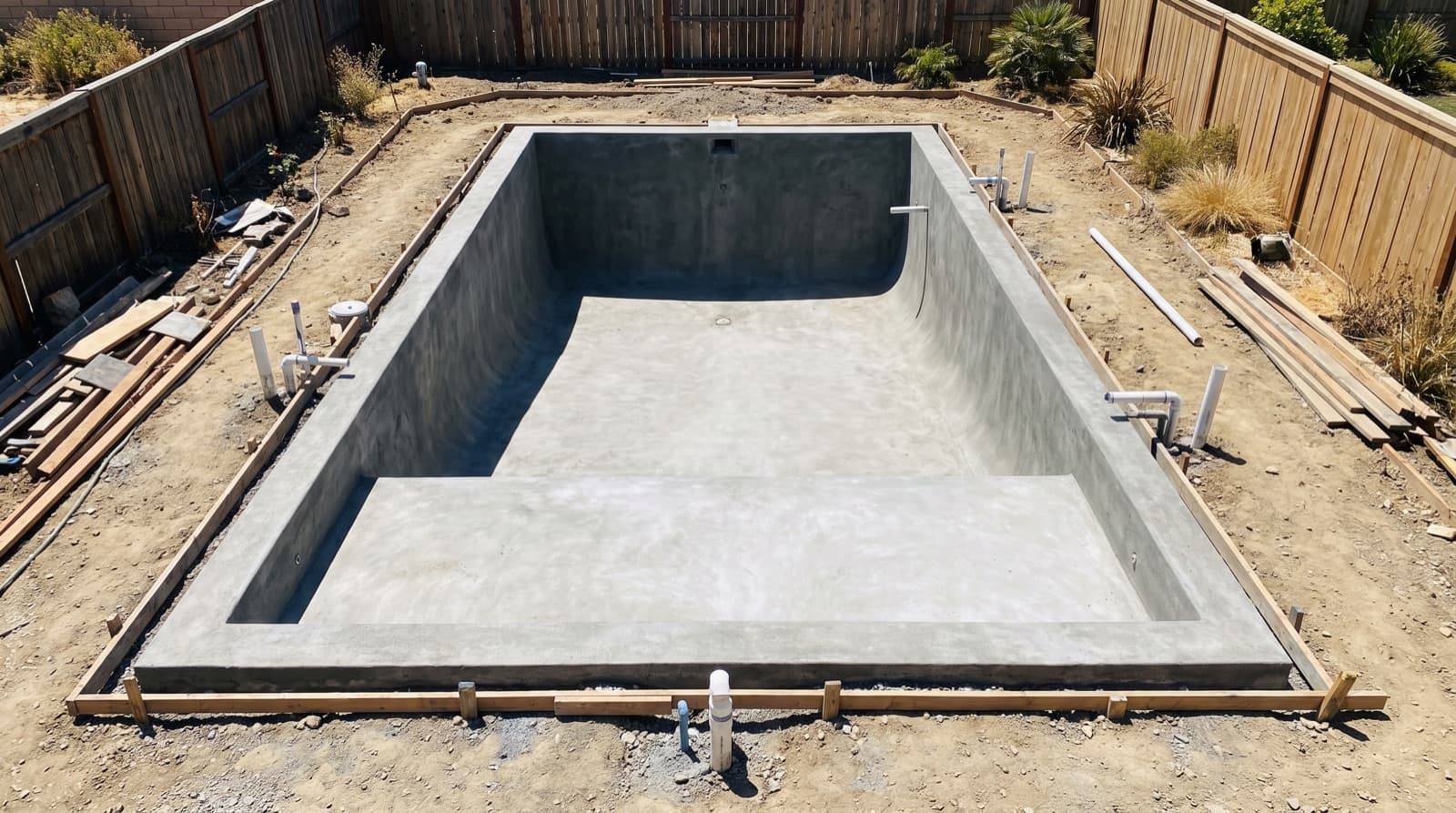
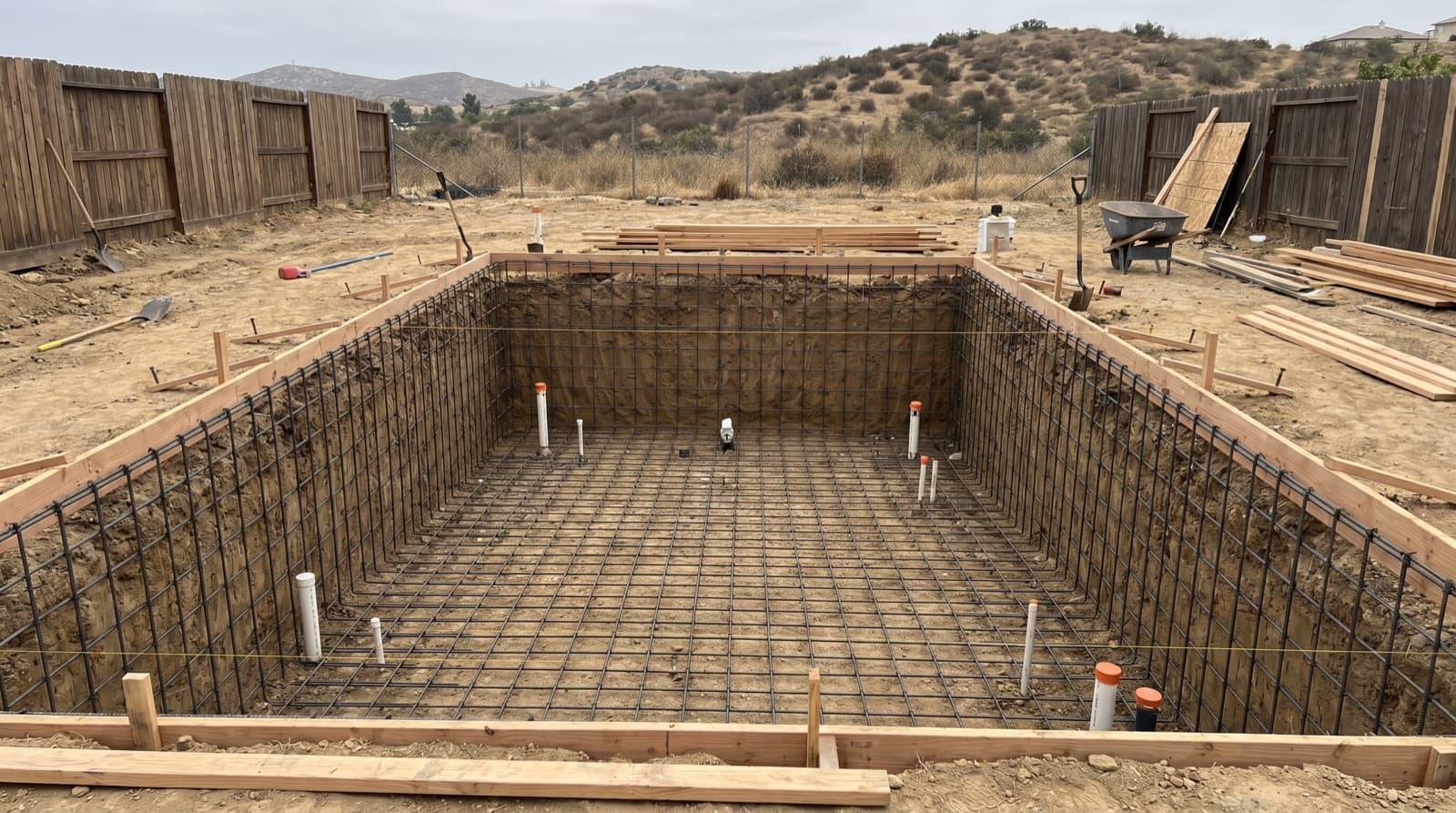
Pre-gunite / pre-plaster. The inspector visits before the Gunite shell is sprayed to verify the rebar cage meets the approved structural drawings.
Plumbing rough-in. Plumbing lines are inspected before they are buried.
Electrical bonding. The bonding grid is inspected before it is covered.
Final inspection. After the pool is complete — including safety barriers, gate hardware, and any required safety devices — the building inspector performs a final walkthrough and signs off the permit. The pool is not officially complete until this sign-off is received.
Your builder schedules all inspections. You do not need to be present, though you are welcome to be.
Realistic timelines — and what affects them
Permitting time. Plan review timelines vary across Orange County, Los Angeles County, and Inland Empire cities — anywhere from two or three weeks in a streamlined jurisdiction to two or three months in a busier one. Some cities offer expedited or over-the-counter review for pre-engineered pools with stamped drawings already on file.
Permitting time runs before the build starts. It is not idle time — it is when final selections are confirmed, materials are ordered, and the build schedule is locked.
Build window. Once permits are in hand and the calendar is set, NEXA builds typically complete in five to seven weeks.
HOA processing. If HOA approval is required, start that process as early as possible. HOA boards often meet monthly, which means one missed cycle can add four to six weeks.
The free design review is the right place to get a realistic timeline estimate for your city and your lot. Timeless Pools builds across Orange County, Los Angeles, and the Inland Empire and can give you a current read on permit timelines in your area.
Timeless Pools holds CSLB #1019202. The company has been recognized in the Pebble Tec World's Greatest Pools program and employs Genesis-certified designers.